
Meet The Famous Tuskegee Airmen
 This is your chance to meet and speak with true aviation and civil-rights pioneers as well as heroes of World War II. Meet some of the famous Tuskegee Airmen at the Udvar-Hazy Air and Space Museum and Center at the African American Pioneers in Aviation.
The Tuskegee airmen were pioneers during World War II. In 1941, the U.S. Congress forced the Army Air Corps (which it was called before it became the U.S. Air Force and a seperate branch of the military) to form an all-black combat flying unit. The War Department (now the Department of Defense) was not pleased with the requirement, so it established criteria that required applicants to have flying experience or a level of education that the department assumed would be difficult to fill. The policy backfired when numerous qualified African-American men not only met, but exceeded the qualifications.
 In 1941, the all-black 99th Pursuit Squadron was activated in Illinois and became the core of what later became called the Tuskegee program. At the Tuskegee Institute in Alabama, the university founded by Booker T. Washington, trainees went through ground, tactical and flying training under the leadership of Benjamin O. Davis Jr., one of the few African-American soldiers at that time to have graduated from West Point.
Facing all kinds of discrimination, segregation, lack of respect, and doubt about their flying and fighting ability, the 99th was finally allowed to serve in combat in 1942. The earliest actions were involved in the North African campaign where they flew against Luftwaffe in limited action.
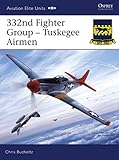
 As the Allies invaded Sicily and later Italy, the 99th was attached to the 79th Fighter Group where they were fully engaged in regular bomber escort missions. After scoring an impressive combat record, the Luftwaffe gave them the nickname the “Black Birdmen”. Allied pilots gave them another name the “Redtails” or the “Redtail Angels” because of their distinctive bright red tails and aggressive protection of Allied bombers. During this campaign, they earned the reputation of having never lost an Allied bomber to enemy fighters and were actively requested as escorts by bomber groups, many of whom had no idea the flyers were African-American.
 The 445 Tuskegee airmen that were deployed overseas shot down 332 aircraft, including three of the new German jets and destroyed many ground targets. Flying over 15,000 sorties the unit received 12 Presidential citations, 150 Distinguished Flying Crosses, over a dozen Bronze Stars and several Silver Stars. They also lost 150 of the original thousand pilots during training or in combat.
Being put in the spotlight as pioneers in the initial steps towards integration of the military, the Tuskegee airmen proved that race was not a factor when it came to patriotism, loyalty, bravery and fighting ability. Even after proving themselves in the war, the Tuskegee Airmen returned to the United States and found themselves being treated as second-class citizens and forced to live under a system of segregation and discrimination. In 1948 President Truman ended segregation in the military with an Executive Order.
Last year, the Tuskegee Airmen were collectively awarded the Congressional Gold Medal in recognition of their service and sacrifice to the United States during World War II.
African American Pioneers in Aviation - The Tuskegee Airmen
Steven F. Udvar-Hazy Center
14390 Air and Space Museum Parkway
Chantilly, Virginia 20151
Date and Time - Saturday, February 24, 10:00 a.m. to 3:00 p.m, Museum is open 10:00 AM to 5:00 PM
Admission - Free
Parking - $12.00
Transportation - Getting to the Udvar-Hazy Center without a car can be a bit challenging, but is possible, but there are several options. First you need to get to Dulles Airport.
The easiest way is to take the Metro subway to the West Falls Church station (Orange line) and take a Washington Flyer Coach to Dulles ($16.00 round-trip). Buses run every 30 minutes.
You can also take the Metro subway to L’enfant Plaza (Yellow line) or Rosslyn (Orange line), then the Metro 5A bus to Dulles Airport (cost about $9.00 round-trip).
From Dulles Airport, catch a Virginia Regional Transit shuttle bus to/from the Udvar-Hazy Center daily from 10:45 - 5:50 ever 45 minutes.


____________________________________________________________
 10 Comments
here from the Carnival of Cities.
Great post about a fine part of our American history.
Hello,
I found your research interesting. With all of your knowlege about the subject, I thought you might be able to offer to the world, a definition of Tuskegee Airmen. I thought that I knew, because in grew up in the presence of at least one. Many of my so called “uncles” were also graduates of the flight school in Tuskegee. But since the Congressional Gold Medal ordeal, it appears that the definition of the term has changed. Perhaps you could shed some light in my direction because I am truly confused and frankly disgusted. Somehow individuals who were in anyway associated with the “tuskegee experience” are able to claim the same recognition as those who actually graduated from the flight school and flew the planes during the war. On the one hand, the TA’s were honored by the idea of being awarded such a medal. On the other hand, it is like they won the lottery by having 6 numbers, but the individuals with 5, 4, 3, 2 and 1 numbers get to share the prize money equally. They have in effect, watered down, or minimized the meaning of this award. Sure, the plight of the mechanics, administrators, ground crews, and the like must have been dificult. But….. did what they accomplished rise to the level of receiving a Congressional Gold Medal, a medal that has only been awarded 300 times in our nations history. This makes a mockery of the entire system. Even individuals that didn’t have any ties to that era have been able to get into the ceremony before many of the remaining “real” Tuskegee Airmen. I hope they ask the “Real Tuskegee Airmen” to stand up during the ceremony. The other people present should be ashamed of themselves for taking up space that should have been reserved for the heroes that laid their lives on the line in those planes. There were in my opinion, only 992 “original Tuskegee Airmen” To claim otherwise is to discount the struggle, plight and achievements of the gentlemen who proudly belong to that elite group. Correct me if I am wrong.
Kristine:
Your message is heart felt. I was unaware of the controversy surrounding the definition of the Tuskegee airmen. Most of the information that I read inferred that the Congressional Gold Medal was awarded to the almost 1,000 Tuskegee fighter pilots, not everyone involved with the Tuskegee program.
As the son of a WW-II veteran, I believe EVERY soldier who served during WW-II, regardless if it was at home, overseas behind the lines or in the hell of combat deserve some form of recognition for their sacrifice and bravery to persevere American democracy.
The pioneering Tuskegee Airmen actually fought on two fronts — one in the air, and the other on the ground against racism. They were true pioneers of equality.
Jon,
Thank you for your comments. I also agree that there are many unsung heros of all backgrounds that deserve recognition. Not all of them deserve special gold medals. You know that an olympic athelete didn’t get there alone, but they are the ones wearing the gold around their necks. It just isn’t true that all of those individuals are “Tuskegee Airmen”, medal or no medal. I guess that is my biggest beef.
No disfavor to the UnTuskegee Airmen. They should have called them something else and pushed it through congresss as such. I am not sure it would have been signed if all of the cosponsors had known the eventual results.
Kristine:
You are so very lucky to have known some of these heroes and been able to hear their stories. And again thanks for providing some additional information about these men.
Perhaps one of your uncles would be willing to provide an insider’s view on the Congressional Gold Medal situation.
They call the soldiers, marines, airmen and sailors of the WW-II era, The Greatest Generation of Americans. The Tuskegee Airmen clearly live up to that reputation.
The WW-II vets I’ve met are humble about their service to their country and don’t seem to be seeking recognition or medal, and I assume the Tuskegee airmen as similar. Collectively, these vets seem to express the sentiments that they were proud to serve their country, and that the true heroes are their comrades that did not return home.
Jon:
I agree, I was lucky. My father is a Tuskegee Airman. The “Uncles” were his tight group of friends that made their way over to visit us. He would never tell others that he was a TA because he is so modest. He feels the Original Tuskegee Airmen were those who did the fighting and held such an outstanding record. My father came along later, after he had earned his wings in the Royal Canadian Air Force (first black to do so). He was awaiting a waiver of flight school, thinking that his wings would be recognized here. He was required to go through, and came out with flying colors, excuse the pun.
Most of the action had already taken place, but he was able to assist the instructors in Tuskegee while awaiting his request. My father is out of town right now and we haven’t had the time to talk. He was recently honored by our City Council, and he said exactly what you said. He was proud to serve and he accepted the honor on behalf of the fallen heroes. He is humble about his accomplishments. I would have to say that the best thing about him is not his “tuskegee airman” status. It is his reputation as a loving and caring husband (56 years) and father of eight. He is a genuinely nice, honest, decent man. I have never heard anyone say an unkind word about him. We think he deserves a best father medal for that.
I don’t think he would be pleased by the situation because it might minimize what Gen. Davis and the other “Original Tuskegee Airmen” did. I will have to let you know because he isn’t a complainer. This is primarily my gripe. I thought he would be allowed into the ceremony to witness the honors. Medal or no medal, he is the same great guy.
NATIONAL AIRMEN ASSOCIATION OF AMERICA
….before the Tuskegee Airmen
by Bennie J. McRae, Jr.
Copyright 1995. LWF Publications. Reprinted from “Lest We Forget,” Volume 3, Number 3 - July 1995.
====================
During the mid 1930’s and prior to World War II a group of foresighted, concerned, and dedicated individuals came together in the Chicago area to form an organization that actively pursued and set the stage for the participation of African-Americans in the realms of aviation and aeronautics.
Under the leadership of Cornelius R. Coffey, Willa B, Brown, and Enoc P. Waters, the National Negro Airmen Association of American was formed with the express purpose…….to further stimulate interest in aviation, and to bring about a better understanding in the field of aeronautics. Shortly thereafter Claude Barnett, director of the Association of Negro Press (ANP), with strong backing from Chauncey Spencer and Dale White, suggested that the word Negro be dropped and the organization renamed the National Airmen Association of America. The proposal was adopted maintaining the original objectives.
On August 16, 1939 application for Certificate of Incorporation was filed in Cook County with the Illinois Secretary of State listing as Directors the following: Cornelius R. Coffey, Dale L. White, Harold Hurd, Willa B. Brown, Marie St. Clair, Charles Johnson, Chauncey E. Spencer, Grover C. Nash, Edward H. Johnson, Janet Waterford, George Williams, and Enoch P. Waters.
Many of the charter members had come to Chicago to further their interest in aviation at the Coffey School of Aviation, one of the few flight training programs in the United States where Blacks could take flying lessons. Chauncey Spencer was encouraged to come to Chicago in 1934 by Oscar DePriest, Congressional Representative, after being told by the Airport Operator in his hometown of Lynchburg, Virginia that “They didn’t teach colored to fly because they didn’t have the intelligence.”
A few months prior to the incorporation, the organization had undertaken a most profound and optimistic mission. With borrowed funds and donations, two members were chosen to take a goodwill tour to stimulate interest in the “first national Negro airshow to be held in Chicago,” and stop in Washington to communicate with lawmakers regarding inclusion of African-Americans in the government sponsored flight training and other aviation related programs. Enoch P. Waters, Jr., a member of the organization and city editor of the Chicago Defender, also suggested that the tour include a stop in Washington, D.C. to urge Congressional representatives to push for inclusion of the Negro in the Army Air Corps.
One thousand dollars was donated by the Jones Brothers, Ed and George, of Chicago who controlled the “policy,” a form of the numbers game, and also owned the Ben Franklin Department store on 47th Street. With five hundred dollars that Chauncey Spencer had saved, the organization was able to rent a Lincoln-Paige bi-plane from Art LaToure. Donations were sought from other organizations that refused, many stated that the proposed “mission was foolhardly and foolish.”
Dale White, a pioneer flyer and the holder of an aircraft engine mechanic’s certificate, and Chauncey Spencer had met a few years earlier and had become close friends. The two were chosen to undertake the history making mission.
Dale White and Chauncey Spencer departed Chicago’s Harlem Airport on May 9, 1939 enroute eastward, and approximately three and one-half hours later were forced to land in a farmer’s field near Sherwood, Ohio due to a damaged crankshaft. Sherwood is located 15 miles west of Defiance and approximately 15 miles east of the Indiana-Ohio border. Repairs were made after a new crankshaft was delivered by Cornelius Coffey, a licensed aircraft mechanic, and Clyde Howard, also an avid aviator.
After a two and one-half day delay at Sherwood, the two departed for Morgantown, West Virginia where they were allowed to refuel the aircraft, but was refused hangar rental space. As night was approaching, they departed Morgantown enroute to the Pittsburgh area with no lights on the aircraft. The beacon at Allegheny County Airport was spotted and they followed a Pennsylvania-Central Airlines transport to a safe landing.
The Civil Aeronautics Inspectors were very upset and temporarily grounded the daring flyers for flying too close and endangering the lives on a commercial airline. Robert L. Vann, Publisher of the Pittsburgh Courier, appeared on their behalf the next morning at a hearing where they were cleared. Mr. Vann then donated five hundred dollars to their cause along with letters to influential representatives.
Spencer and White departed Pittsburgh and flew directly to Washington where they were met by Edgar Brown, National Airmen’s Association lobbyist, and also the president of the Negro Federal Workers Employees Union. While accompanying Mr. Brown to the Capitol and Congressional offices, they happen to come in contact with Senator Harry S. Truman, Democrat from Missouri, who was intercepted and introduced to White and Spencer along with an explanation of their mission to Washington.
Senator Truman asked, “What do you do?” They explained that both worked for the WPA. “So what are you doing here? Why aren’t you working today?” They explained that they had taken time off because they felt a need to dramatize the need for the inclusion of the Negro in the Army Air Corps. Truman seemed surprised and asked, “Why aren’t you in the Air Corps? Can’t you get in?” Edgar Brown explained that Negroes were not accepted.
“Have you tried?” asked Truman. The reply, “No sir, but others have tried and have been embarrassed. They have been turned away without regard for their training or ability. Only the color of their skin mattered.” “Well, I think you should try,” Truman stated. Dale White replied, “We’d like to try but we’d also like for you to help us open the door. We haven’t been able to break down the barriers ourselves. Mr. Truman, you don’t know what it means to be embarrassed. I’ve tried these things before. There’s just no use.” “I’ve been embarrassed before,” stated Truman. The reply, “Not like this, Mr. Truman. Not like we are.”
Senator Truman had spoken in his normal blunt way and wanted to see the aircraft. Later that afternoon he arranged to visit the airport and climbed up on the wing in order to look in the cockpit. He asked, “How much gas can this carry? How much did it cost to rent? Do you have insurance?” He was enthusiastic, however, he did not want to go for a ride. He stated that, “If they had guts enough to fly this thing to Washington, he’d have enough guts to back them.” Shortly afterwards, he helped put through legislation in the Senate insuring that Blacks would be trained along with whites under the Civilian Pilot Training Program.
Another key figure that White and Spencer met and talked with was Congressional Everett Dirksen, Republican for Illinois who later introduced the amendment to the Civil Aeronautics bill in the House of Representatives prohibiting discrimination in the administration of the benefits of the Act. Three years later a bill was passed including Blacks in the Army Air Corps.
The Civilian Pilot Training Act was passed on June 27, 1939 and by August funds had been appropriated. Through the persistent effort of Charles Alfred Anderson and James C. Evans, Tuskegee Institute submitted an application in which receipt was acknowledged by the Civil Aeronautics Administration on September 25, 1939. Two other Black institutions, West Virginia State College and North Carolina Agricultural and Technical College, had already been approved. James C. Evans of West Virginia State College whose brother-in-law was G. L. Washington, the Director of the Department of Mechanical Industries, had already spoken to the Civil Aeronautical Administration officials on behalf of Tuskegee Institute.
Following some operational and bureaucratic procedures, the program was instituted at Tuskegee in late 1939. Two instructors from the Alabama Polytechnic Institute (Auburn University), Robert G. Pitts and Bloomfield M. Cornell, agreed to conduct the ground school portion of the training until the Tuskegee instructors were trained. They taught the four principle units of instruction, amounting to sixty of the seventy-two hours. The flight training initially was conducted by the Alabama Air Service, owned and operated by Joseph W. Allen out of the municipal airport in Montgomery, who stated that he had no reservations about teaching blacks to fly.
March 25, 1940 should be remembered and embedded in the minds of everyone. On that date George A. Wiggs arrived in Tuskegee to administer the standard written examination required of all Civilian Pilot Training students. After administering and grading the exams, he revealed that the Tuskegee students had passed every subject. They had become the only southern school with a 100 percent pass rated, but had done so by a wide margin in comparison to Georgia Tech., Auburn, and North Carolina. Prior to that time in the seven southern states, no college had a record of 100% passing on the first examination.
The average score was 88 percent. One third of the students scored above 90 percent. The lowest score was 78 percent and the highest scores were recorded by Charles R. Foxx, who averaged 97 percent, Alexander S. Anderson with 96 percent, and Elvatus C. Morris with 95 percent.
The students almost equaled the 100 percent pass rate on the flight evaluations, By the end of May 1940, when the flight phase was completed all but one of the students had passed the flight examination administered by the Civil Aeronautics Administration inspectors and received their private pilot license.
Charles Foxx became one of the seven students in the southeastern region to compete for the Shell Intercollegiate Aviation Scholarship, and was one of only forty-nine students in the nation to vie for the $1,500 scholarship. He had been selected not only for his near-perfect score on the written examination, but also because he was a superb pilot with superior flying skills. C. Alfred “Chief” Anderson recalled many years later that in his fifty years of flying he had “never seen a person as slick a pilot as Charlie Foxx. He was a natural born pilot.”
As we go through the revelry over the dedication and record of the Tuskegee Airmen during World War II, let us also remember the foresightedness, advocacy, fortitude, and courageous efforts by members of the National Airmen Association of America, especially Chauncey Spencer and Dale White; strong supporters, such as, Enoch Waters of the Chicago Defender, Robert Vann of the Pittsburgh Courier, the Jones Brothers, Walter White and James Weldon Johnson of the National Association for the Advancement of Colored People, Lester Granger of the National Urban League; Senator Harry S. Truman, Congressman Everett Dirksen and other lawmaker who believed in and supported the effort; the students in the first CPT class at Tuskegee who proved that they could compete and excel along side their white counterpart; ground school instructors Robert Pitts, Bloomfield Cornell, and flight instructor Joseph W. Allen.
Finally, let us never forget the men and women who organized and became charter members of the National Airmen Association of America; the organization’s staunch supporters; the students of the first Civilian Pilot Training class at Tuskegee; Lewis Jackson, Chief Administrative Officer; C. Alfred “Chief” Anderson, Chief Flight Instructor; the civilian flight instructors; support personnel of the 66th Army Air Corps Flight Training Detachment; and others, through their dedication and competency, who contributed by proving that people of African descent could excel in the field of aviation and soar among the best of them despite existing prejudices, apprehensions and intimidations.
The record speaks for itself.
***********************
REFERENCES:
Jakeman, Robert J. THE DIVIDED SKIES: Establishing Segregated Flight Training at Tuskegee, Alabama, 1934-1942. Tuscaloosa: The University of Alabama Press, 1992.
Nalty, Bernard C. STRENGTH FOR THE FIGHT: A History of Black Americans in the Military. New York: The Free Press (A Division of Macmillan, Inc.),1986.
Spencer, Chauncey. WHO IS CHAUNCEY SPENCER? Detroit: Broadside Press, 1975.
Spencer, Chauncey. Interview, October 15, 1994, Lynchburg, Virginia.
——————————————————————————-
I met tonight a Tuskegee Airman by the last name of Holiday in Palm Bay Florida. I was wondering who this man was, his full name and if he indeed was a Tuskegee Airman. Can you tell if this is true. Thanks.
You might be able to do some research on the Tuskegee Airmen, as there were many, both pilots and grounds crews.
Here’s a link to start. http://www.tuskegee.edu/Global/story.asp?S=1129330
I am looking for anything on the airmen from Arkansas. Milton P. Crenchaw, Dr. Richard C. Caesar, Woodrow Crockett, Marsille P. Reed, James Ewing, Granville Coggs, Alexander Anderson, Marcus Aurelius Perkins, William T. Mattison, Jerry T. hodges, & Herbert V. Clark. I am writing an article on them. thanks.